


In the air-conditioned haven of the Hilton just downriver from the American Diabetes Association’s 2026 Scientific Sessions in New Orleans, Mike Doustdar spoke with a quiet confidence and a smile as he acknowledged Novo Nordisk’s stumbles in recent years.
Although the first three financial quarters of Doustdar's tenure have come with their share of obstacles, the unprecedented launch of Novo’s oral Wegovy offering in obesity this year added much-needed texture to a market where Eli Lilly had managed to assert its dominance with Zepbound. Meanwhile, Novo’s ethos of pitching Wegovy's ingredient semaglutide and the company's future chronic weight loss offerings as holistic metabolic treatments rather than drugs to shed pounds alone was borne out in a bevy of obesity readouts at the conference.
Still, even with the humidity bearing down on patients, media and executives in the Crescent City this past weekend, Doustdar kept his cool as he reflected on the direction Novo is heading under his stewardship.
“I have said publicly I am a lot more optimistic today than the day I got the job, on many fronts,” Doustdar said in an interview with Fierce, away from the bustle of the conference.
“I was always positive about, of course, Novo Nordisk’s core capabilities [and] culture. I’ve been here for 34 years, and you have to like the company, otherwise, I guess you wouldn’t stay here so long,” he quipped.
Doustdar, who assumed the role of Novo’s President and CEO from longtime leader Lars Fruergaard Jørgensen in August 2025, got his start at the Danish drug giant in 1992, beginning his professional journey in the unassuming post of an office clerk for the company in Vienna, Austria.
By the summer of 2025, when Novo was in dire need of a sea change, Doustdar was overseeing the company's ex-U.S. operations. Despite the size of this role, Doustdar was relatively unknown outside of the Copenhagen-based company and the board’s decision to install him as CEO came as a shock to some industry soothsayers. Instead, they'd been putting their chips behind an external candidate, and likely one more intimately attuned to the U.S. commercial environment.
Still, Doustdar—an Iranian-born, Austrian national—is no stranger to the U.S., having grown up in the country.
Novo had explicitly tied Jørgensen’s departure to the tough competition it’s faced from chief rival Lilly in the U.S. and abroad. A plunge in the company’s share price had begun in mid-2024 as myriad factors, from branded competition from Zepbound to supply shortfalls and the rise of a GLP-1 compounding cottage industry, began to weigh on Novo’s fortunes.
To Doustdar’s mind, Novo’s fundamentals were never in doubt. That said, “I did actually think that we need[ed] to become more competitive: That Novo has had many decades of competition, but in an environment that was moving slower,” the CEO told Fierce.
Novo’s dedication in the fields of diabetes, obesity and metabolic health more broadly has remained consistent for many years, but the dynamics at play with the rise of the GLP-1 market for chronic weight management have turned the pressure up significantly.
Novo traces its roots back more than 100 years to the Nordisk Insulinlaboratorium, which first commercialized production of insulin in Denmark in 1923 after the extraction and purification technique for the hormone was brought to the country from Canada.
While insulin patients “often stay on those products for a very long period of time,” obesity is “a lot more like a fast consumer goods type of a behavior where they move, typically, on the next best thing, on the next cheapest thing—on the next buzzword out there,” Doustdar explained.
“I was hoping that, of course, we can transform Novo Nordisk at its core, keeping some of the capabilities that we are very proud of, but building more skills and competencies that allow us to retain and sustain a durable leadership in this new obesity era,” Doustdar explained. “Nine months into it, I’m a lot more optimistic that we can.”
That emboldened confidence in obesity is informed by strong execution in recent months across the areas of R&D, manufacturing and commercial execution, Doustdar argued.
A bevy of late- and earlier-stage next-gen offerings for weight management and broader metabolic health were on display from Novo at ADA. And, after initial growing pains following Wegovy’s launch and a boom in overall GLP-1 popularity earlier in the decade, the pharma has long since resolved supply issues around its semaglutide products as it continues to make globe-trotting manufacturing expansions.
In fact, the company's ability to ramp up production is now “second to none,” Doustdar argued.
Meanwhile, on the proving ground of the U.S. weight loss market, “the most obvious proxy of that has been the launch of our Wegovy pill,” Doustdar said.
Alongside multiple data readouts, Novo also used ADA to announce that the Wegovy pill, which officially launched in the U.S. on Jan. 5—several months ahead of Lilly’s rival GLP-1 pill Foundayo—has surpassed more than 3 million prescriptions, with the Danish company asserting that more than 80% of those scripts represent obesity patients new to the GLP-1 class.
“In light of competition having arrived—if that’s not acceleration, I don’t know what is,” he told Fierce.
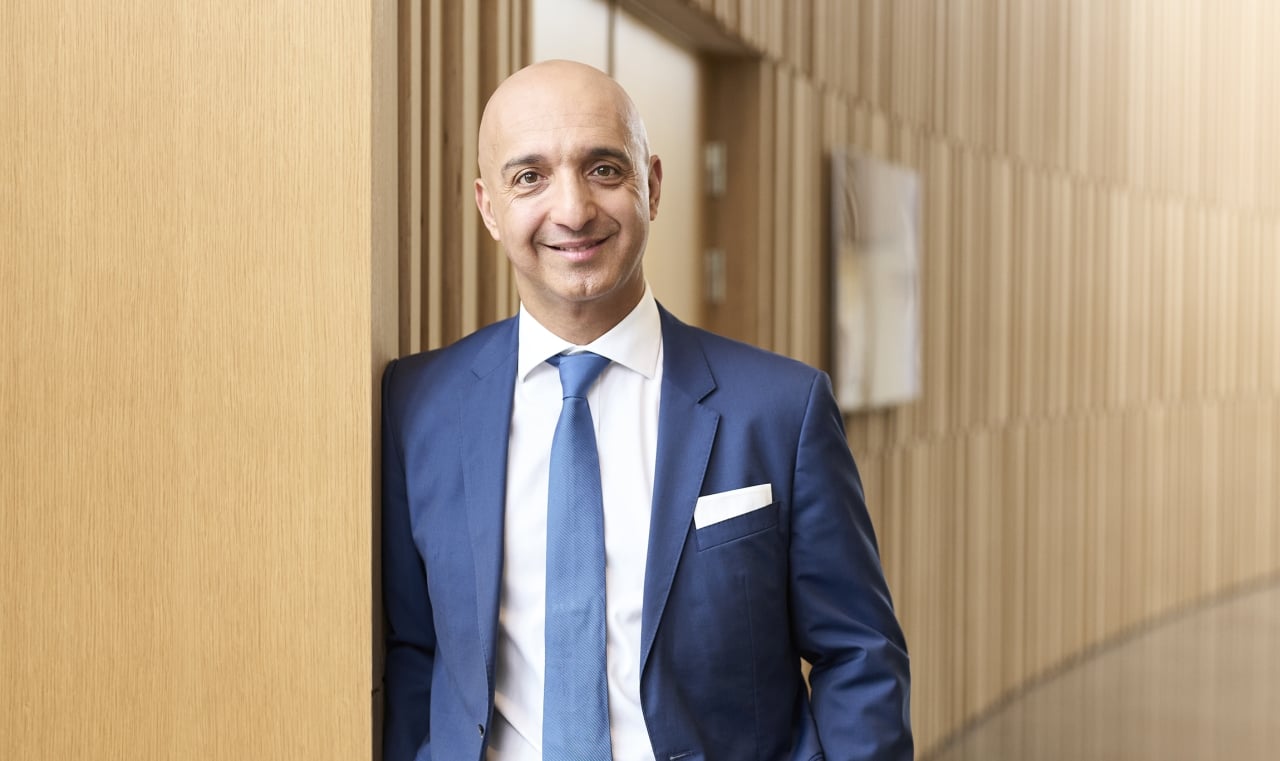
“Hopefully, we can project that internal confidence externally and get some trust earned back and continue with what we have started,” the CEO added.
As for how Doustdar views his stewardship of the company in comparison to his predecessors, he acknowledged that he comes “from the commercial part of the organization.”
“When you come from that part of the company, then you’re exposed much more to competition; that’s our job—to compete and sell,” he said. “So that’s one, I think, muscle memory I have.”
At the same time, coming from the marketing battlefield, “you’re closer to the patients,” he pointed out.
“You’re one step closer to the front line, and the interactions with the physicians, and seeing the burden of the disease and the suffering of patients more than when you are at the center,” he told Fierce. “Both of these things, I think, are crucial for this era of Novo Nordisk becoming more competitive and putting the patient at the center of what we do and asking ourselves how can we be a better company.”
Doustdar has spoken previously of his perception that Novo suffered from the “curse of a leader” in both helping unlock the current obesity market and trial-running many of its hitherto unseen pitfalls. Now, in a further sign of the times, the CEO said “it’s interesting coming to ADA and recognizing how it’s more about obesity now than diabetes.”
“In a humble way, our company takes pride in that, because when we went to this field, a lot of people were questioning us—and some maybe even made fun of us,” he said.
“To see how all of that hard work and struggle led into pretty much all companies now having a booth talking about the same thing that excited you decades ago makes us very proud as a patient-centric organization, because the field of obesity is so large, unfortunately, that it requires many microphones, many people to echo the voice of these patients.”
The obesity époque
In part, Doustdar tied some of Novo’s market struggles in recent years to an overemphasis on comparisons of raw weight loss statistics alone, whereas his company has long sought to treat obesity as a multifaceted condition marked by frequently intersecting comorbidities.
As compared to Zepbound, Wegovy and its oral formulation both carry a key cardio risk reduction indication, which Novo has made essential to its pitch for the drug as going further than helping patients drop pounds alone. Lilly’s dual agonist, by contrast, holds a secondary indication in obstructive sleep apnea in the U.S.
With Novo’s “beyond weight” messaging intact when it broke open the obesity market with Wegovy, Doustdar suggested that the company may have been “a little ahead of our time.” He suggested that Novo’s market capitalization and share price “suffered” in part “because the patients of that era ... were trying to tell us, ‘Well, we don’t want to go beyond weight; we want magnitude of weight loss.’”
Recognizing the temperature, the company has attempted to adjust internally and “emphasize that it’s not only beyond weight—it’s weight and beyond,” Doustdar noted.
“I don’t think we were wrong,” he stressed, again pointing to the mood and topics on display at this year’s conference.
“This congress is again giving me hope,” the CEO explained. “For the first time, I’m hearing people not talk about a single digit number on weight loss effect, but a combination of things that a patient wants—better tolerability, maybe a pill instead of an injection, maybe the quality of the weight loss is the issue—all of those things that we started spending billions of dollars in, and maybe initially did not see the return, I think was the right thing.”

“The ‘trick,’” Doustdar added, “is not to get upset about it. To continue with confidence—listening to, of course, the market and adjusting where we fell—but also being confident that at the end of it, obesity does not kill. Conditions and complications related to obesity kill.”
Faith in the plan is important, though it bears repeating that some of Novo’s key recent R&D endeavors have not been as successful as industry watchers, investors or the company may have hoped.
Earlier this year, Novo’s CagriSema was dealt a major blow when results from an 809-participant open-label study pitting it against Lilly’s Zepbound ingredient tirzepatide showed Novo’s next-generation obesity candidate faring worse.
CagriSema combines the novel amylin analog cagrilintide—which the company is also trialing on its own—with the company's approved GLP-1 receptor agonist semaglutide. At the 84-week mark, a 2.4/2.4-mg dose of CagriSema was linked to 23% average weight loss, while the 15-mg tizepatide dose used reached a weight loss figure of 25.5%. At the time, Novo’s chief scientific officer Martin Holst Lange, M.D., Ph.D., told journalists that Lilly's drug had “performed unusually well on efficacy compared to what has been typically seen in most previous trials of similar nature.”
Novo submitted its U.S. application for CagriSema in obesity or overweight with at least one weight-related comorbid condition in December, with the FDA expected to weigh in on an approval later in 2026.
Doustdar said his confidence in Novo’s overall pipeline is unshaken, arguing that the recent CagriSema readout is a good example of the world getting “obsessed with one number.”
“We see this as a really good asset,” the CEO told Fierce. “And you can pick some numbers inside that maybe could be better, and some numbers that are best in class.”
Combining the known profile and wealth of evidence on semaglutide with a newer approach like an amylin could offer “the best of the two worlds,” Doustdar suggested. “I think when the product comes out, people will be able to judge that this is a newer, better version of what already is a best-in-class product.”

As Fierce's time with Doustdar drew to an end, the CEO made sure to overview other potential jewels embedded in the company's portfolio.
“The rest of the pipeline is also incredibly exciting,” he said, pointing to multiple in-development assets like unimolecular peptide GLP-1 and amylin receptor agonist zenagamtide and its oral formulation. There's also cagrilintide, which Doustdar framed as a product with “a lower efficacy but better tolerability for those who choose to have less weight loss but also less nausea and vomiting.”
Then there are a pair of triple agonists in the form of UBT251 and a second that targets amylin rather than glucagon in addition to GIP and GLP-1, plus more “specialized products” like Akero Therapeutics-developed fusion protein efruxifermin for fatty liver disease, the IL-6-targeting antibody ziltivekimab for cardiovascular conditions, and Novo’s potential next-generation insulins, including IcoSema.
But those therapies are all later-stage, per Doustdar, who teased that Novo has more in store from its earlier pipeline that it plans to reveal at its upcoming capital markets day and throughout the rest of 2026.
“We have seen a serious acceleration of our R&D organization and number of assets that are being developed,” he said.